ALRD-Samakal Round Table Meeting on Election Menifesto
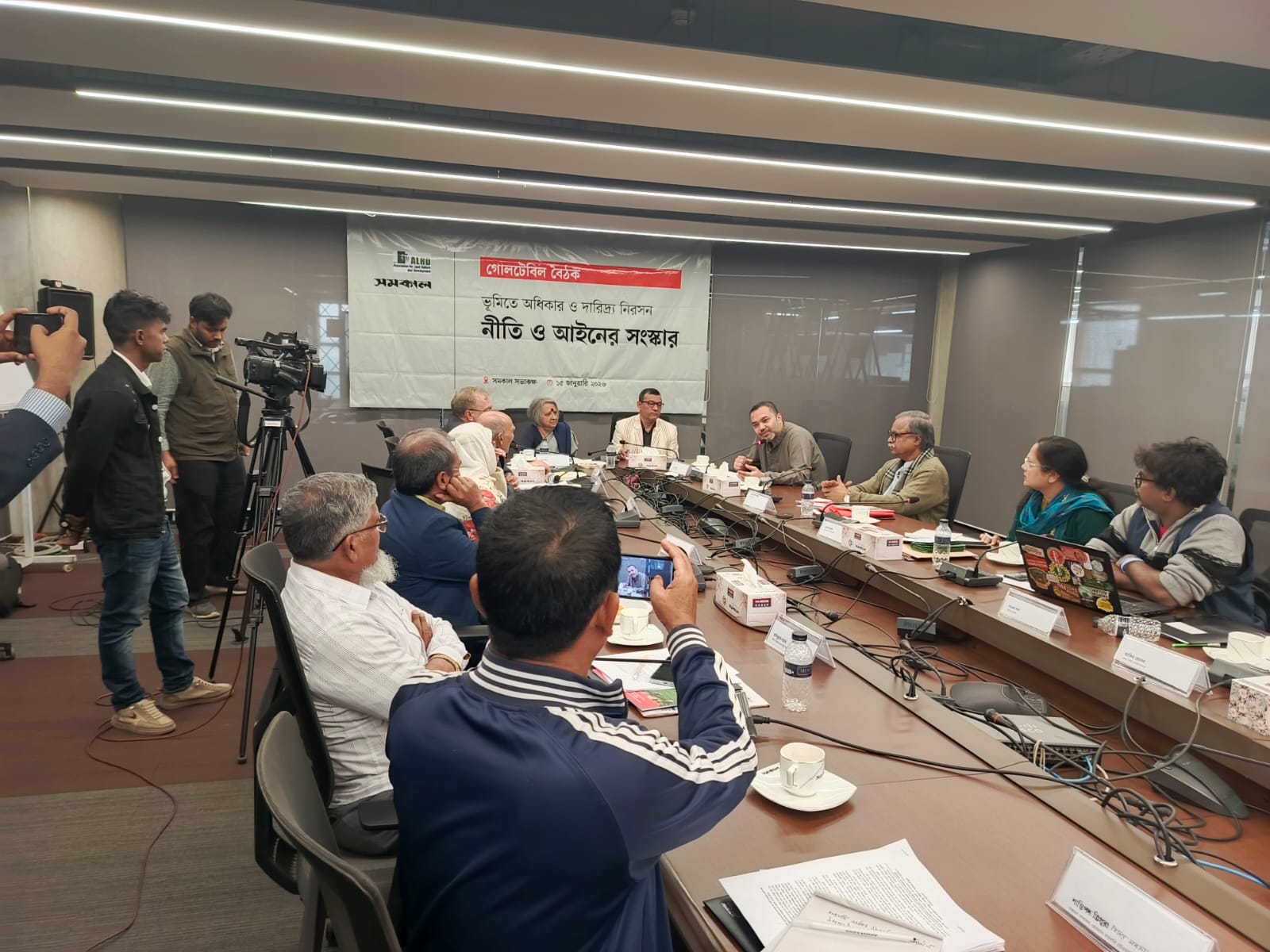
ALRD–The Daily Samakal Roundtable Meeting
“Formation of Land and Agrarian Reform Commission: A National
Imperative for Farmers’ Development”
Agriculture remains the backbone of Bangladesh’s economy. To unlock its full potential, speakers at a roundtable organized by the Association for Land Reform and Development (ALRD) and the Daily Samakal stressed the urgent need for a National Land and Agrarian Reform Commission. They argued that simplifying land management, ensuring fair distribution among small and marginal farmers, protecting indigenous land rights, and guaranteeing women farmers’ wages and incentives are essential steps toward sustainable development.
The discussion, titled “Land Rights and Poverty Alleviation: Policy and Law Reforms”, produced a set of recommendations for both the interim and future governments, focusing on land reform, agricultural development, and environmental protection.
Key Highlights from the Roundtable
-
Transparency in Land Governance
Dr. Iftekharuzzaman, Executive Director of Transparency International Bangladesh (TIB), described land as “one of the most corrupt sectors.” He urged annual public disclosure of officials’ income and expenditure, noting that while election candidates submit affidavits, bureaucrats remain exempt. He emphasized consolidating land registration and management under the Ministry of Land to reduce corruption and inefficiency.
-
Political Commitments
BNP Chairman’s Advisor Dr. Mahdi Amin affirmed BNP’s alignment with the proposals, pledging to prioritize them if entrusted with state responsibility.
Bangladedesher Samajtantrik Dal (BSD) General Secretary Bazlur Rashid Firoz reminded that 80% of Bangladeshis depend on agriculture. Even during the pandemic, farmers sustained the nation, underscoring the urgency for political leadership to champion agrarian reforms.
-
Structural Inequalities in Agriculture
ALRD Executive Director Shamsul Huda highlighted findings from the 2019 Agricultural Census:
-
17 million farming families exist nationwide.
-
91.7% are small or marginal farmers.
-
56% of the rural agricultural population is landless.
-
Farmers received less than 24% of credit or subsidies over three decades.
He presented 21 recommendations, including:
-
Establishing a National Land and Agricultural Reform & Environmental Protection Commission.
-
Creating a land bank.
-
Securing rights of sharecroppers and minorities.
-
Reforming khas land management.
-
Guaranteeing women’s land rights.
-
Promoting domestic seed production and conservation.
-
Indigenous Land Rights
Sanjeeb Drong, General Secretary of the Bangladesh Indigenous Forum, noted that 20,000 Garo people in Madhupur—and many in Sylhet—lack land documents despite living on ancestral lands. Government declarations of reserve forests and eco-parks threaten their livelihoods. He called for a dedicated land commission for indigenous communities.
-
Women’s Rights in Agriculture
Ferdousi Sultana Begum, former member of the Women’s Affairs Reform Commission, warned that women are excluded from property ownership, depriving them of government support such as fertilizers and seeds. Despite being the backbone of agricultural labor, divorced or separated women often face homelessness. She urged enforcement of inheritance laws and gender-sensitive land policies.
-
Historical Context
Researcher Pavel Partha reminded that peasant movements—from Tebhaga onward—have long demanded justice, yet the state has failed to honor farmers’ aspirations. He called for deeper reflection on why land remains such a critical and contested issue.
Conclusion
Speakers unanimously agreed: land reform is inseparable from poverty alleviation and national development. A permanent Land and Agrarian Reform Commission, backed by transparency, inclusivity, and political will, is essential to secure the rights of farmers, women, and indigenous communities, and to build a more equitable future for Bangladesh.